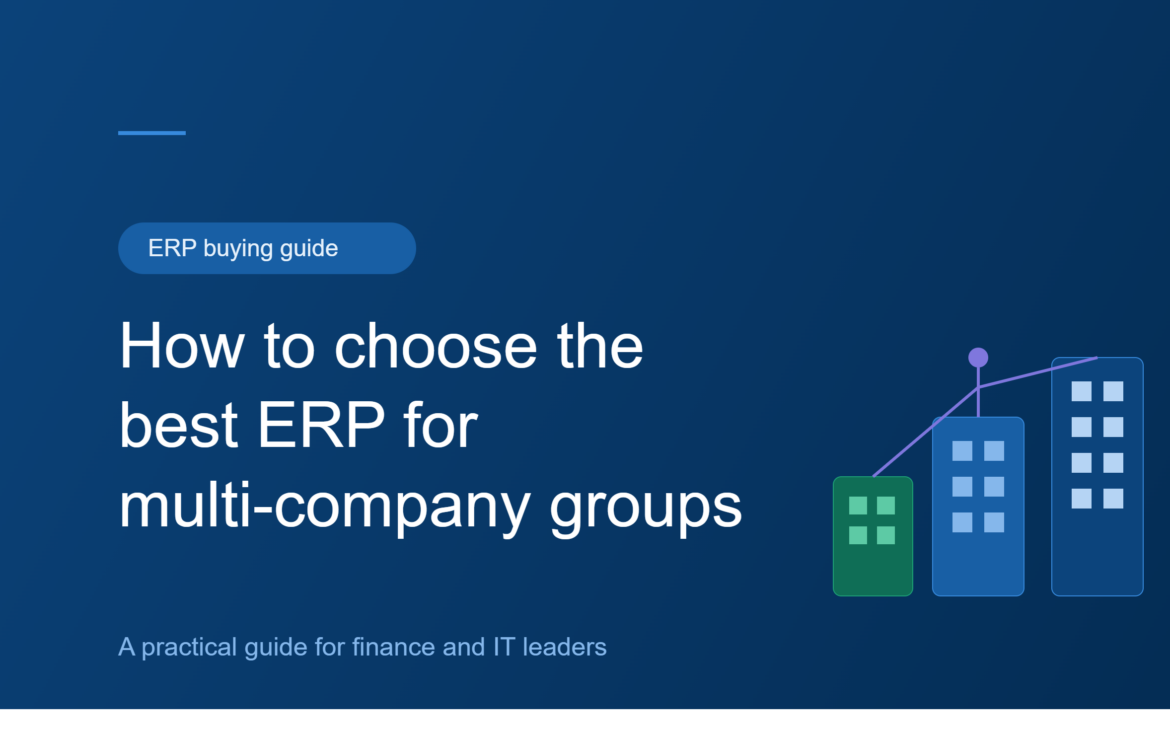
As businesses expand across multiple legal entities, managing operations with disconnected systems becomes increasingly difficult. Finance teams spend valuable time reconciling spreadsheets, tracking intercompany transactions, and consolidating reports instead of focusing on strategic decisions.
A modern Enterprise Resource Planning (ERP) system eliminates these challenges by providing a centralized platform while maintaining the financial and operational independence of each company. Whether your organization operates across Saudi Arabia, the UAE, Bahrain, or other GCC markets, choosing the right ERP is a critical business decision.
This guide explains the key factors to consider when selecting an ERP for multi-company organizations and why many growing businesses choose Odoo for scalable operations.
What Should a Multi-Company ERP Deliver?
A multi-company ERP is designed to manage multiple legal entities within a single platform. Each company can maintain its own chart of accounts, tax configuration, warehouses, bank accounts, pricing policies, and approval workflows while allowing leadership to access consolidated business insights.
The right ERP should help organizations:
- Maintain separate financial records for every legal entity
- Automate intercompany transactions
- Consolidate financial reporting
- Support multiple currencies and tax regulations
- Standardize business processes across the group
- Protect sensitive information through role-based access
This balance between centralized visibility and decentralized control is essential for growing organizations.
Key Features to Look for in the Best ERP for Multi-Company Groups
1. Centralized Reporting with Company-Level Control
One of the biggest reasons businesses invest in ERP software is to simplify financial consolidation.
Instead of manually combining reports from different subsidiaries, the ERP should provide real-time group reporting while allowing finance teams to drill down into individual transactions whenever needed. Decision-makers should have complete visibility into revenue, expenses, inventory, and cash flow without sacrificing entity-specific controls.
This level of transparency improves reporting accuracy and significantly reduces month-end closing time.
2. Automated Intercompany Transactions
Intercompany billing often becomes one of the most time-consuming accounting processes.
An effective ERP should automatically create linked sales, purchase, receivable, and payable transactions between related companies while maintaining a complete audit trail. Automation minimizes duplicate entries, reduces reconciliation errors, and strengthens financial governance across the organization.
At the same time, the system should remain flexible enough to support different pricing models, approval hierarchies, and local tax requirements.
3. Multi-Currency and Local Compliance
Businesses operating across GCC countries frequently deal with multiple currencies and country-specific regulations.
Your ERP should support:
- Multi-currency accounting
- Foreign exchange adjustments
- VAT compliance
- Electronic invoicing requirements
- Country-specific financial reporting
Choosing software with strong localization capabilities helps organizations stay compliant as they expand into new markets.
4. Standardized Processes with Flexible Configuration
While consistency is important, every company within a group may have unique operational requirements.
A reliable ERP allows businesses to standardize procurement, inventory, CRM, sales, and finance while still supporting company-specific approval workflows, payment terms, tax rules, and warehouse operations.
The ability to configure the system without excessive customization helps reduce long-term maintenance costs and makes future upgrades much easier.
Why Odoo Is a Strong Choice for Multi-Company Businesses
For many small and medium-sized enterprises, Odoo offers an excellent balance between functionality, flexibility, and cost.
Its integrated ecosystem connects accounting, CRM, sales, purchasing, inventory, manufacturing, HR, projects, and eCommerce within a single platform. This eliminates the need for multiple disconnected applications and provides a consistent user experience across departments.
Another major advantage is Odoo’s modular approach. Businesses can begin with essential applications and expand their ERP environment as operational needs evolve, making it a practical long-term investment.
However, software alone does not guarantee success. The effectiveness of any ERP implementation depends on proper planning, system configuration, user training, and ongoing support.
Choosing the Right Odoo Implementation Partner
Implementing a multi-company ERP requires more than technical expertise. It demands a deep understanding of finance, business processes, compliance, and organizational structure.
When evaluating an implementation partner, consider the following:
- Experience managing multi-company ERP projects
- Knowledge of GCC tax and compliance requirements
- Proven implementation methodology
- Data migration capabilities
- User training and post-implementation support
- Ability to configure workflows without unnecessary customization
Working with an experienced Odoo Gold Partner ensures your ERP is designed around your business processes rather than forcing your business to adapt to the software.
If your organization operates across Saudi Arabia, partnering with the Best Odoo implementation partner in Saudi Arabia can significantly reduce implementation risks while accelerating your return on investment through industry best practices and localized expertise.
Questions to Ask Before Making Your Decision
Before selecting any ERP solution, request a demonstration using your actual business scenarios instead of generic examples.
Ask how the system manages:
- Intercompany sales and purchases
- Shared service allocations
- Financial consolidation
- User permissions across companies
- Multi-currency reporting
- Future expansion into new entities
A qualified implementation partner should also explain which features are available out of the box, which require configuration, and where customization may be necessary.
Final Thoughts
Selecting the best ERP for a multi-company group is about more than replacing spreadsheets. It’s about creating a connected business environment where every legal entity operates independently while leadership gains accurate, real-time visibility across the entire organization.
For businesses planning long-term growth, أودو provides a scalable and flexible platform capable of supporting finance, operations, inventory, sales, and reporting from a single system. Combined with guidance from an experienced Odoo Gold Partner, organizations can implement an ERP solution that improves efficiency, strengthens governance, and supports sustainable expansion across Saudi Arabia and beyond.