If you’ve heard the term “ERP” and thought it sounded complicated, you’re not alone! But for today’s businesses, big or small, a good ERP system is like the brain of your company, making sure all the parts work together perfectly.
And that’s where Odoo ERP comes in.
What exactly is Odoo ERP?
أودو stands for “On-Demand Open Object,” and “ERP” stands for Enterprise Resource Planning.
In simple terms, Odoo ERP is an all-in-one suite of business software applications that helps you run your entire company from a single place.
Instead of using one program for sales, a different one for accounting, another for inventory, and yet another for your website, Odoo brings all those functions together.
It replaces many different, unconnected tools with one smart, integrated system. This means your data flows seamlessly from one department to the next, giving you a complete, real-time picture of your business.
The magic of the modular system – Odoo ERP
One of the biggest reasons people love Odoo is its modular system,
Imagine building with LEGOs. You start with the basic pieces you need, and then you can easily add more blocks as your building gets bigger. Odoo works the same way:
- Start Small: You might only need apps for Sales and Invoicing to begin with. You just install those two.
- Grow Big: As your business expands, you can simply add new apps like Inventory, Manufacturing, Website Builder, eCommerce, or Human Resources (HR).
Because all these “apps” are built by Odoo, they work together automatically. When a customer places an order on your Odoo-built website, it instantly updates your sales records, your inventory count, and creates an invoice in your accounting app. No more manual data entry between different systems!
Key Features of Odoo ERP
Odoo provides a huge collection of apps to cover almost every business need. Here are some of the most popular areas:
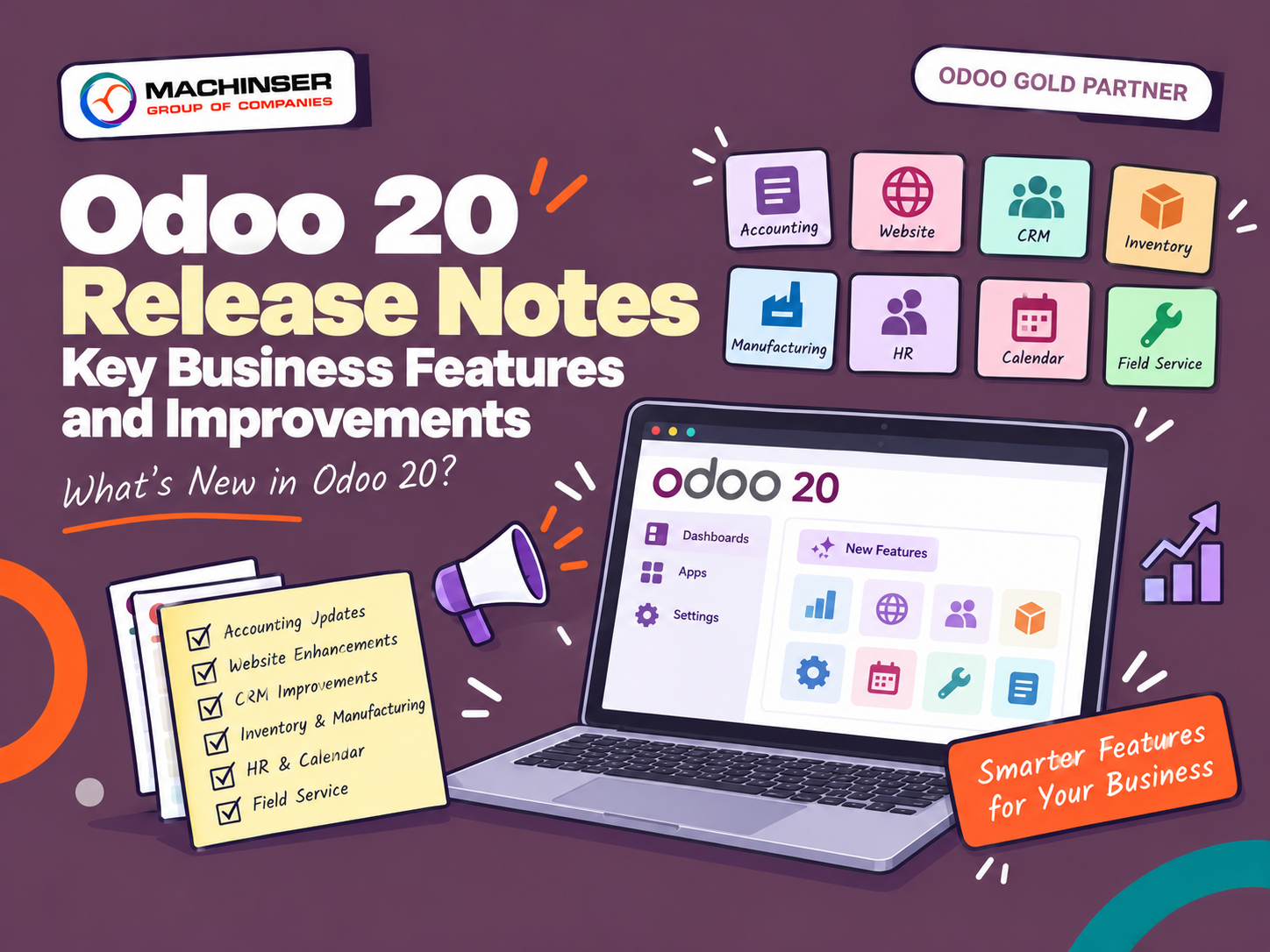
Customer Relationship Management (CRM): Track your leads, manage your sales team’s activities, and improve communication with your customers.
Inventory & Manufacturing: Keep perfect track of your stock, manage warehouses, and plan your production schedule so you never run out of a crucial part.
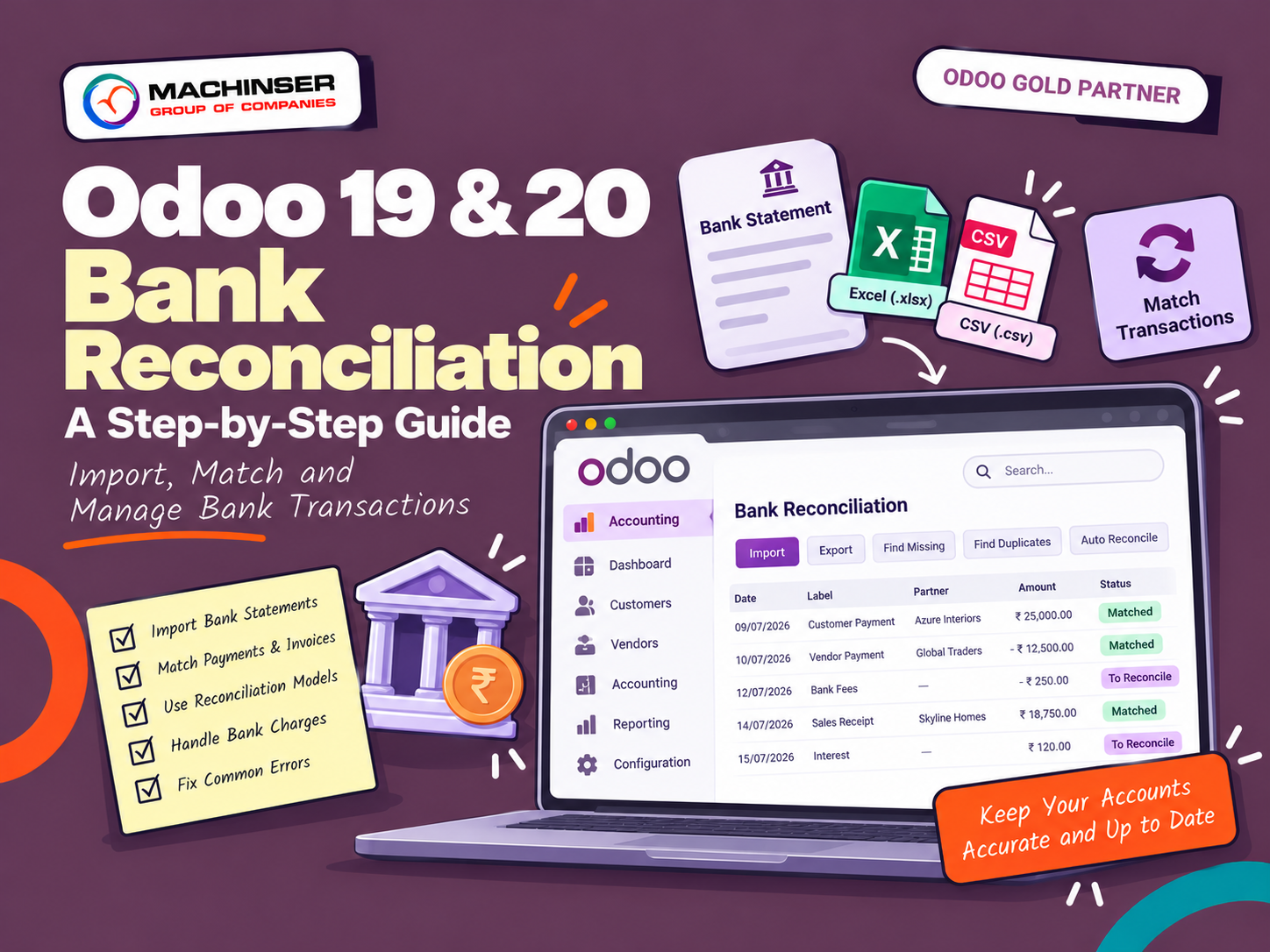
Accounting & Finance: Handle bills, bank reconciliations, and create clear financial reports, all while complying with local laws.
Website & E-commerce: Build a professional website and a fully functional online store without needing a coder.
HR Management: Manage employee records, track time off, and streamline the hiring process.
Why do businesses choose Odoo?
- Saves Time: Odoo automates repetitive tasks. For example, once an order is confirmed, the system can automatically generate the warehouse picking list and the customer invoice. This dramatically reduces manual work and human errors.
- Saves Money: Compared to many traditional ERPs that cost a fortune and charge for every feature, Odoo is known for being affordable. It even offers a Community Edition that is open-source (meaning free) and a paid Enterprise Edition with advanced features and full support. You only pay for the users and apps you actually use.
- Better Decision Making: Because all your data lives in one place, you get real-time insights into how your business is performing. You can see sales trends, inventory levels, and financial health instantly, allowing you to make smarter, faster decisions.
- Flexibility and Customization: Odoo is an open-source platform. This means that if the standard app doesn’t do exactly what you need, it can be customized or new features can be built on top of it. This makes it a perfect fit for almost any industry, from retail to manufacturing to services.
- Scalability: Whether you’re a small startup with five employees or a large enterprise with hundreds, Odoo can grow with you. You can start with a few apps and add more as your business complexity and size increase.
تنفيذ اودو
Adopting any new major software is a big step. The process of setting up Odoo, called implementation, usually involves:
- Analysis: Understanding exactly how your business works and what you need.
- Configuration: Setting up the chosen Odoo apps to match your specific processes.
- Data Migration: Moving your existing customer, product, and financial data into Odoo.
- Training: Teaching your employees how to use the new system effectively.
While Odoo’s user interface is known for being friendly and intuitive, most businesses work with an official Odoo Partner or a consultant. These experts help map your business needs to Odoo’s capabilities, ensuring a smooth and successful transition.
Conclusion
Odoo ERP offers a powerful solution to a common business problem, disconnected systems and scattered information. By providing a suite of seamlessly integrated business applications, Odoo helps you streamline operations, save time, reduce costs, and gain a clearer view of your company.
It is a flexible, scalable, and modern platform designed to simplify your complex business life, allowing you to focus less on managing software and more on growing your business.
For more info about Odoo implementation , contact +966 56 927 1692